The constraint is the boarding window
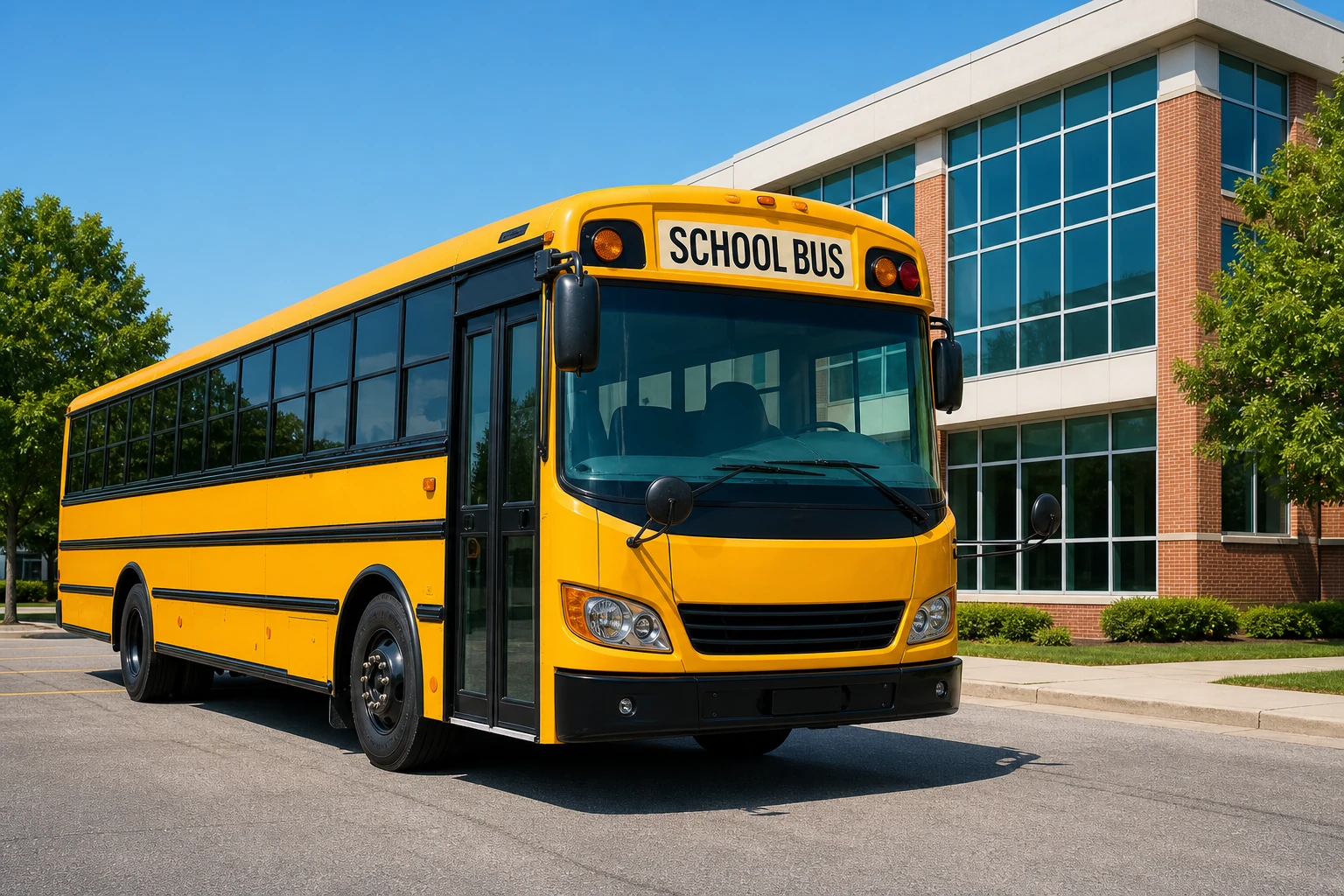
A school bus stop lasts thirty to sixty seconds. In that time, between five and fifteen students board. Whatever identifies them has to work at roughly one student per two seconds, in the dark, in the rain, while children are carrying bags and moving up steps.
Every argument about attendance technology comes back to that window.
Passive RFID against the constraint
Throughput. A read completes in well under a second and requires no positioning by the student — walking past the reader with the card in a bag or blazer pocket is sufficient. The reader keeps pace with the queue.
Environmental tolerance. Unaffected by darkness, rain, cold hands, or a scarf across the face. Nothing about the physical conditions on a winter morning degrades it.
Failure mode. A student forgets their card. This is common, visible, and handled by the expected-but-absent exception: the platform knows they should have boarded, so their absence from the record raises an alert rather than passing unnoticed.
Privacy exposure. The credential holds an identifier. If it is lost, someone has a number that means nothing outside the school's system, and it is deactivated from the dashboard in seconds.
Fingerprint against the constraint
Throughput. Requires deliberate positioning of a finger on a sensor and typically two to four seconds per student including retries. At ten students that is thirty seconds of boarding time consumed by authentication alone, in a window that is forty seconds long.
Environmental tolerance. Poor. Cold fingers, wet fingers, dirty fingers and the naturally shallower ridge detail of young children all raise the failure rate substantially. Rejection rates on primary-age children are markedly worse than on adults.
Failure mode. A student who cannot be read holds up the queue and creates pressure on the attendant to wave them through — which produces an attendance record with unrecorded gaps that nobody flagged.
Privacy exposure. You are holding biometric templates for minors. That is a different category of data, with different regulatory weight, different breach consequences, and one irreversible property: a compromised fingerprint template cannot be reissued. A child cannot get new fingerprints.
Face recognition against the constraint
Throughput. Good in principle — no interaction required, and recognition can happen as the student passes.
Environmental tolerance. Weak in exactly the conditions that apply. Boarding happens at dawn and dusk with strong backlighting or none, students are frequently in winter hoods and scarves, and they board at an angle in motion. Accuracy under those conditions is materially worse than the benchmark figures vendors quote.
Failure mode. Silent misidentification. This is the serious one. A card either reads or does not. Face recognition can confidently return the wrong student, producing an attendance record that is wrong and unflagged — which is worse than no record, because it will be trusted.
Privacy exposure. Facial templates for a population of minors, plus in most deployments a retained image stream. The consent, retention, access-control and breach-notification obligations are extensive, and the parental-consent conversation is materially harder.
The question that settles it
What is the attendance record for?
It is for knowing that the child who was supposed to be on the bus was on the bus, and for being able to demonstrate that afterwards. It is not for preventing impersonation — no eight-year-old is swapping cards to fraudulently board a school bus, and if two siblings do swap, the exception logic catches the mismatch anyway.
Biometrics solve non-repudiation: proving that the person present was definitely that person and not someone holding their credential. That is the right technology for a bank vault. It is not the problem on a school route, and paying for it in throughput, reliability on children, silent-misidentification risk and irreversible biometric data for minors is a poor trade.
Where biometrics do belong
Staff access rather than student boarding. A driver authenticating at the start of a shift is one read, by an adult, with time to do it properly, and the population is small and consenting. That is a reasonable fit.
For students boarding a bus in forty seconds, a card that reads through a blazer pocket in the dark is not the less sophisticated option. It is the correct one.
Tags
- rfid
- biometrics
- privacy